Leave Your Message
Choosing the best Cable Tray in 2026 is no longer a simple material decision. It affects heat control, installation speed, maintenance access, and long-term reliability.
MarketsandMarkets’ Cable Management System report identifies continued growth in data centers, renewable energy, manufacturing, and infrastructure projects. Its findings point toward stronger demand for adaptable routing systems. Grand View Research also reports expanding investment in cable management, supported by industrial modernization and digital facilities. These reports are useful indicators, not universal answers.
IEC 61537:2016 provides requirements for cable tray and cable ladder systems. NFPA 70, the 2023 National Electrical Code, addresses installation, grounding, support, and conductor protection. Mark W. Earley, a respected electrical-code authority, has stated, “The NEC is not a design manual.” That warning matters. Code compliance does not replace engineering judgment.
A wire mesh tray may suit a server room with frequent changes. A galvanized ladder tray can perform well beneath heavy industrial cables. Solid-bottom trays may offer stronger protection against dust, dripping liquids, or falling debris. Aluminum can reduce weight in corrosive environments, although its cost may challenge smaller projects.
No single tray wins every project.
Selection should consider cable weight, span length, ventilation, corrosion exposure, fire conditions, and future expansion. One weakness remains common: buyers often compare prices before examining access and loading requirements. That approach may save money today but create difficult maintenance work later.
This guide examines the leading Cable Tray types for 2026, using recognized standards, industry evidence, and practical installation conditions. Some conclusions may require reconsideration as materials, energy systems, and facility designs continue changing.

What Are the 2026 Best Cable Tray Types?
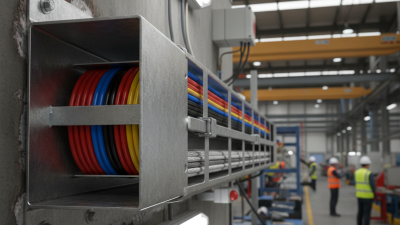
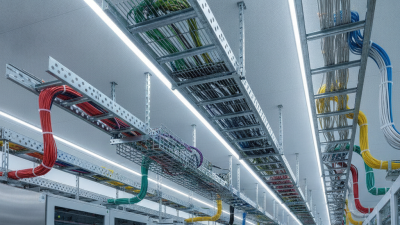
A cable tray is a structural pathway that supports and organizes insulated power, control, and communication cables. Unlike a closed conduit, it allows easier access, ventilation, and visual inspection. Common types include ladder, perforated, solid-bottom, and wire-mesh trays. Each design handles a different installation condition.
Type selection matters because the wrong tray can create heat buildup, cable congestion, sagging, or difficult maintenance. Ladder trays suit heavy cables and long spans because their rungs improve ventilation. Perforated trays offer balanced support for smaller cables. Solid-bottom trays protect sensitive wiring from falling dust, but they may retain more heat. Wire-mesh trays work well in compact indoor spaces and support frequent cable changes.
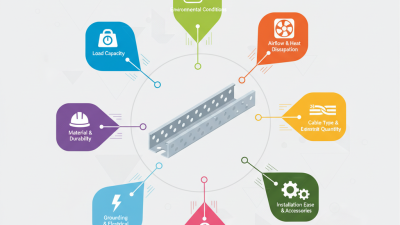
Load capacity is only one concern. Check cable weight, span length, bend radius, corrosion exposure, grounding continuity, and future expansion. In humid or chemical areas, material choice becomes critical. Aluminum reduces weight, while coated or stainless steel may better resist corrosion. Experienced installers also leave practical separation between circuits, even when the tray appears large enough. It is easy to underestimate growth.
Tips: Measure the actual cable bundle, not an optimistic estimate. Keep spare capacity for future additions. Inspect supports, fasteners, and bonding points during installation. A neat tray is helpful, but neatness alone does not prove safety. Recheck the design when cable types or building conditions change.
| Cable Tray Type | Basic Construction | Ventilation and Heat Dissipation | Cable Access and Maintenance | Typical Applications | Main Advantages | Key Limitations | Selection Considerations |
|---|---|---|---|---|---|---|---|
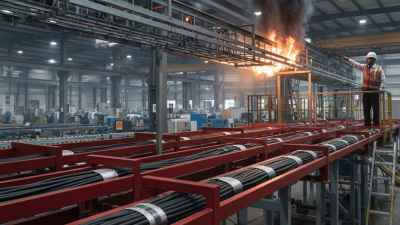
| Ladder Cable Tray | Two longitudinal side rails connected by regularly spaced transverse rungs. | Excellent airflow because most of the cable surface remains exposed. | Easy to add, remove, and inspect cables from above; cables can be secured to the rungs. | Power distribution, large conductors, industrial plants, substations, and long cable runs. | High ventilation, strong support, efficient cable separation, and comparatively low weight. | Provides less continuous support for small, flexible, or closely spaced cables; cables may require additional fastening. | Check rung spacing, cable support requirements, loading, span length, and the minimum bending radius of the cables. |
| Perforated or Trough Cable Tray | A tray with a ventilated bottom formed by repeated holes or slots, usually with solid side rails. | Good airflow and heat dissipation, although generally lower than an open ladder design. | Offers continuous or near-continuous support while retaining practical access for routing and inspection. | Control cables, instrumentation, building services, and mixed cable installations with moderate heat loads. | Balances cable support, ventilation, protection, and installation flexibility. | Heavier than many ladder designs and less suitable for very high heat loads or large cable bundles requiring maximum airflow. | Review hole pattern, opening size, allowable fill, cable weight, and whether small cables could pass through the openings. |
| Solid-Bottom Cable Tray | A tray with a continuous, unperforated bottom and raised side rails. | Limited natural ventilation compared with ladder, ventilated, and wire mesh trays. | Provides a smooth support surface and helps prevent small cables from falling through; cable additions may be less convenient. | Sensitive instrumentation, communication cables, locations requiring shielding from falling debris, and short protected runs. | Continuous cable support, improved protection from below, and reduced risk of small cables dropping through the tray. | Can retain heat and moisture; drainage and thermal calculations may be important in outdoor or humid environments. | Consider environmental exposure, condensation, cable heat generation, bonding, grounding, and whether a ventilated cover is required. |
| Wire Mesh or Basket Tray | A lightweight open framework made from welded wire mesh, commonly formed into a basket-like channel. | Very high airflow and heat dissipation because of its open structure. | Fast cable placement and frequent changes are practical; cables are commonly laid into the basket and secured as required. | Data centers, telecommunications, fiber-optic systems, control wiring, and short-to-medium indoor routes. | Lightweight, easy to cut and modify, highly accessible, and efficient for dense low-voltage cable routing. | Usually less suitable for very heavy power cables or long spans; sharp cut edges must be properly treated and protected. | Verify load capacity, span, edge protection, bonding continuity, support spacing, and compatibility with cable bend-radius requirements. |
| Channel Cable Tray | A narrow, shallow tray or channel with a solid or ventilated base and side walls. | Moderate ventilation; performance depends on the base design and cable fill. | Convenient for small cable groups and branch routes, but less suitable for large cable volumes. | Small control circuits, instrument wiring, branch cabling, and limited-space installations. | Compact, economical for small cable quantities, and suitable for routing where a full-width tray is unnecessary. | Limited capacity, lower expansion allowance, and reduced heat dissipation when heavily filled. | Confirm cable quantity, future expansion, minimum bend radius, support spacing, and separation from power circuits. |
| Single-Rail or Spine Tray | A central structural rail supports cable-support members or accessories, creating an open pathway. | Very good airflow around the cables because the design is highly open. | Provides flexible access, but cable arrangement and fastening depend strongly on the selected support accessories. | Lightweight control, instrumentation, and communication cable routes where low visual impact or flexible routing is desired. | Open appearance, good ventilation, and adaptability in congested or architectural areas. | May offer less continuous support and lower heavy-load capability than ladder or solid-bottom systems. | Check manufacturer-rated loading, accessory compatibility, cable restraint, span limits, and resistance to vibration. |
| Covered Cable Tray System | A cable tray fitted with a removable or hinged cover; the tray beneath may be ladder, ventilated, or solid-bottom. | Ventilation depends on the underlying tray and cover arrangement; solid covers can reduce heat dissipation. | Protects cables from falling objects, dust, ultraviolet exposure, and some environmental contaminants while remaining removable for access. | Outdoor routes, industrial areas, dusty locations, walkways, and installations requiring additional mechanical or environmental protection. | Improves protection against debris and sunlight and can help control unauthorized access to cabling. | Adds weight and cost; covers may restrict ventilation and can complicate cable inspection if access is limited. | Evaluate cover type, wind and snow exposure, drainage, corrosion resistance, heat buildup, and access requirements. |
| Architectural or Decorative Cable Tray | A visually refined tray system designed to remain exposed in commercial, public, or architectural spaces. | Usually good when the tray has an open or ventilated design, but depends on its enclosure and finish. | Designed for visible, organized cable routing with accessible installation and maintenance. | Commercial interiors, transit facilities, retail areas, museums, offices, and other exposed installations. | Improves appearance while providing an organized pathway for power, lighting, or low-voltage cables. | May prioritize appearance over heavy-duty capacity and may require careful coordination with architectural finishes. | Review structural loading, finish durability, fire and electrical requirements, cable segregation, and coordination with other services. |
Selection should be based on cable type, current-carrying capacity, heat dissipation, environmental conditions, mechanical loading, support span, corrosion exposure, grounding and bonding requirements, fire considerations, local electrical codes, and applicable project standards. No single tray type is best for every installation.