10 Essential Tips for Choosing the Right Perforated Cable Tray
Choosing the right Perforated Cable Tray is crucial for effective cable management in various industrial applications. According to a recent report by MarketsandMarkets, the global cable tray market is expected to grow at a CAGR of 5.2% by 2025. This growth reflects the increasing importance of efficient cabling systems in commercial and industrial settings.
In selecting a Perforated Cable Tray, factors such as load capacity and environmental conditions cannot be overlooked. For instance, an improper choice may lead to unnecessary cable wear or even system failures, costing organizations significant downtime and repair expenses. The right tray ensures proper airflow, minimizing overheating risks, thus enhancing system longevity.
It’s clear that while the options are vast, not all solutions are equal. Each project demands careful evaluation of materials and designs. Relying on unreliable sources for choosing cable trays can result in serious setbacks. Decision-makers must consult industry experts to navigate these choices effectively. This careful consideration will ultimately lead to an optimal setup that safeguards both infrastructure and budget.

Understanding Perforated Cable Trays and Their Importance
Perforated cable trays play a crucial role in modern electrical installations. These trays not only support and manage cables but also contribute to the overall safety and efficiency of electrical systems.
According to a recent industry report, poor cable management can increase maintenance costs by 30%. This highlights the importance of choosing the right perforated cable tray.
When selecting a cable tray, consider the material. Options range from aluminum to steel, each with distinct advantages. Aluminum is lightweight and resistant to corrosion, making it suitable for various environments. On the other hand, steel offers higher strength and durability, ideal for heavy-duty applications.
Tip: Evaluate the installation environment. Factors like humidity and temperature can affect your choice.
Ventilation is another key reason for using perforated trays. Proper airflow reduces heat build-up, which can cause system failures. Research shows that efficient heat dissipation can extend the lifespan of electrical components by up to 20%.
Tip: Always account for future expansion needs. Cable trays should accommodate potential increases in cable volume.
Investing in the right perforated cable tray can enhance performance. However, not all installations go as planned. Evaluate your needs carefully to avoid potential issues, like overloading or inadequate support. The balance between functionality and safety is essential in every decision.
Factors to Consider When Selecting Perforated Cable Trays
When selecting perforated cable trays, several factors require careful consideration. Start with the material. Steel, aluminum, and fiberglass all have different properties. Steel offers strength but can rust. Aluminum is lightweight and more resistant to corrosion. Fiberglass, while non-conductive, may be suitable for specific environments. Choose wisely based on your project’s needs.
Another factor is the load capacity. Overloading a tray can lead to structural failure. Make sure to calculate the total weight of the cables plus any additional accessories. This ensures safety and reliability in your installation.
Lastly, think about the installation method. Some trays are easier to install than others. Consider how much time and labor you can allocate. If you're uncertain, consult with a professional for guidance. This can save time and reduce mistakes in the long run. Choosing the right perforated cable tray is crucial, and taking these factors into account will lead to a successful project.
Material Options for Perforated Cable Trays: Pros and Cons
When selecting perforated cable trays, the choice of material significantly impacts performance and longevity. Steel, aluminum, and fiberglass are the most common options available. Each has distinct advantages and disadvantages that need careful consideration.
Steel trays are known for their strength and durability. According to a 2021 industry report, steel can withstand heavy loads and resist damage in harsh environments. However, they are prone to rust if not properly coated. Aluminum, on the other hand, is lightweight and resistant to corrosion. It’s a good choice for areas with high moisture. Yet, it may not hold up under extreme weight compared to steel.
Fiberglass trays provide excellent resistance to chemicals and moisture. They’re suitable for industries like food processing or pharmaceuticals. However, fiberglass can be more costly and less widely available. The initial investment may be higher, but the long-term savings in maintenance are worth considering. Weighing these materials carefully ensures optimal choice tailored to specific project needs.
Material Options for Perforated Cable Trays: Pros and Cons
This chart represents the pros and cons score of different material options for perforated cable trays, helping you make an informed decision.
Evaluating Load Capacity and Size Requirements for Cable Trays
When selecting the right perforated cable tray, evaluating load capacity and size requirements is crucial. Load capacity directly affects the safety and efficiency of your installation. Overloading a cable tray can lead to catastrophic failures. Be sure to assess the weight of the cables you plan to use. This includes both the initial installation and any potential future expansions.
Size requirements also play an important role in your choice. A cable tray that is too small will lead to cramped conditions. This can make maintenance difficult and can create heat issues. Measure the dimensions of your installation area. Ensure that the chosen tray accommodates not just the current installation but also future cable management needs.
Tip: Consider the installation environment. A tray that fits your space well enhances durability. Another tip: regular inspections can catch wear or overloading early. Reflect on past experiences where size or capacity led to issues. Such reflections can prevent repeat mistakes. Choosing wisely today can save you headaches tomorrow.
Installation and Maintenance Best Practices for Perforated Cable Trays
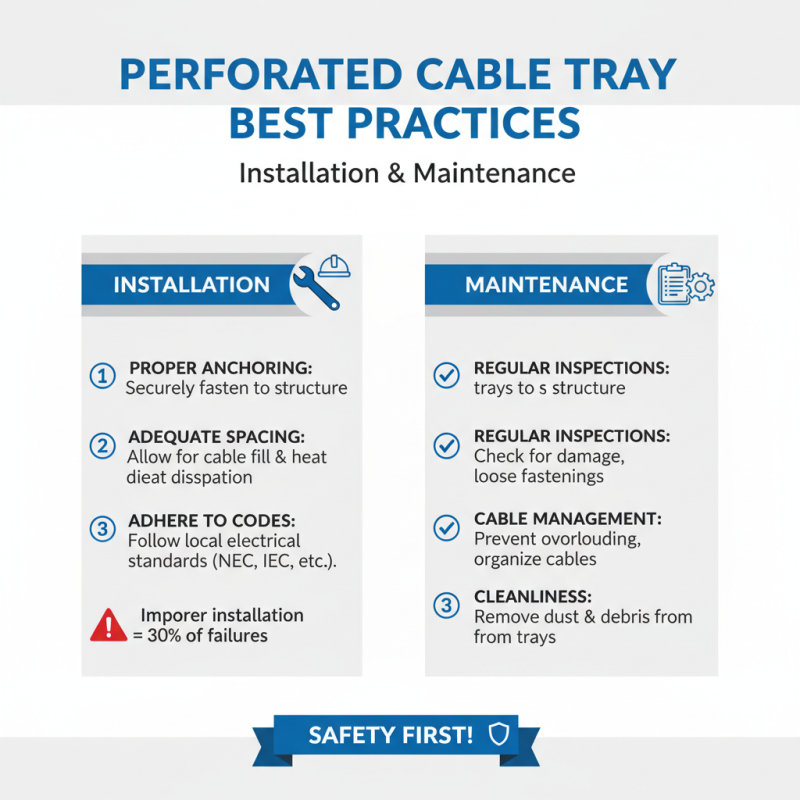
Installation and maintenance of perforated cable trays require careful consideration. According to a recent industry report, improper installation can lead to 30% of cable tray failures. The critical aspect is to ensure that trays are anchored properly and spaced adequately. Installers should adhere to the local electrical codes and standards, as deviations often result in unsafe conditions.
Regular inspections are essential for maintaining cable trays. A survey by an electrical safety group indicated that 40% of cable tray issues stem from neglect. It’s crucial to check for signs of wear or damage at least twice a year. Keeping the trays clean from dust and debris can enhance their longevity. Sensors for temperature and moisture can also help in proactive maintenance. These measures not only prevent failures but also contribute to workplace safety.
Despite best practices, challenges will arise. Misalignment during installation may lead to stress on cables. Additionally, the choice of materials affects durability and heat dissipation. Some installations may realize issues months later, revealing that the initial setup was flawed. Addressing these problems requires a knowledgeable team and a commitment to quality. Regular training for installation teams is advisable, as techniques and standards evolve.