Cable Protection is easy to overlook until a cable is crushed beneath a cart, scraped against a sharp edge, or exposed to rain and dust. The right product can reduce wear, improve organization, and make routine inspection easier. But no single guard, sleeve, conduit, or ramp suits every installation. Details matter.
This guide to the Top 10 Cable Protection Products for Buyers compares common options by application, material, installation, and practical limitations. You will find solutions for workshop floors, outdoor runs, equipment cabinets, and moving cables. A flexible sleeve may bundle several wires neatly, while a floor ramp can shield cables crossing a busy walkway. Fit comes first. Buyers should check cable diameter, bend radius, traffic load, temperature range, and exposure conditions against the product’s published specifications. Those small checks can prevent a costly mismatch.
Product rankings are a starting point, not a substitute for site assessment. Manufacturer data, compatibility notes, and inspection guidance deserve a close read. Some products are quick to install but less convenient to remove; others offer stronger physical coverage but need more space. That trade-off is real. Consider how often cables move, who may contact them, and whether maintenance staff can inspect them without dismantling nearby equipment. The best Cable Protection choice is the one that matches the actual route and working conditions—not merely the lowest price or most impressive description. A careful comparison helps buyers narrow the field with clearer expectations.
Cables face more than ordinary wear. A cart wheel can crush a floor lead; a sharp metal edge can cut its insulation. Moisture, heat, chemicals, and repeated bending add different risks. Cable protection should match the actual hazard, not simply look rugged. Small details matter. Check temperature range, impact resistance, bend radius, and whether the enclosure suits indoor or outdoor exposure. For grouped cables, avoid overfilling: crowded runs can trap heat and make inspection harder. Keep connectors accessible, and choose materials compatible with the cable jacket.
The risk is measurable, though protection is not a cure-all. NFPA’s Home Fires Involving Electrical Failure or Malfunction report, covering 2015–2019, estimated an annual average of 46,700 U.S. home fires involving electrical failure or malfunction. These fires caused an estimated 390 deaths, 1,330 injuries, and $1.5 billion in direct property damage each year. The figures describe electrical failures broadly, not cable damage alone. That distinction matters. A sleeve or conduit cannot fix a loose connection, overloaded circuit, or damaged cable. Inspect routes for abrasion, heat marks, loose supports, and water entry, especially at bends and equipment entrances. I still see protection specified by appearance alone; it is an easy shortcut, but not a reliable assessment.
The second digit in an IP code indicates protection against water ingress. Higher digits represent different standardized water exposure tests—not a universal measure of product quality. Select cable glands, enclosures, and other protection components to suit the installation environment, and verify the rating of the complete assembled system. IPX8 immersion conditions are specified by the manufacturer.
Buyers should begin by mapping the cable route and identifying its real hazards. A cable beneath a workshop bench faces different risks from one exposed to outdoor rain or repeated movement. Note contact with sharp edges, oil, dust, heat, and foot traffic. For moving equipment, check the required bend radius and how often the cable flexes. Small details matter. A sleeve that fits loosely may slide, while a tight conduit can make inspection difficult.
Compare material, inner diameter, wall thickness, temperature range, and installation method against the actual cable bundle. Check that connectors and bends fit without pinching or leaving gaps. Ask for test information relevant to abrasion, impact, or environmental exposure, and read the stated limits carefully.
A sample is useful. Fit it over a representative cable section, then inspect the route during normal movement and maintenance. One comparison may remain imperfect: a short trial cannot show years of wear. Record what was tested, including cable size and conditions, so quotes and samples can be judged consistently.
Don’t choose on price alone. A product that is hard to install or inspect may add avoidable work later.
Top 10 Cable Protection Products for Buyers
Top 10 Cable Protection Products and Their Key Features
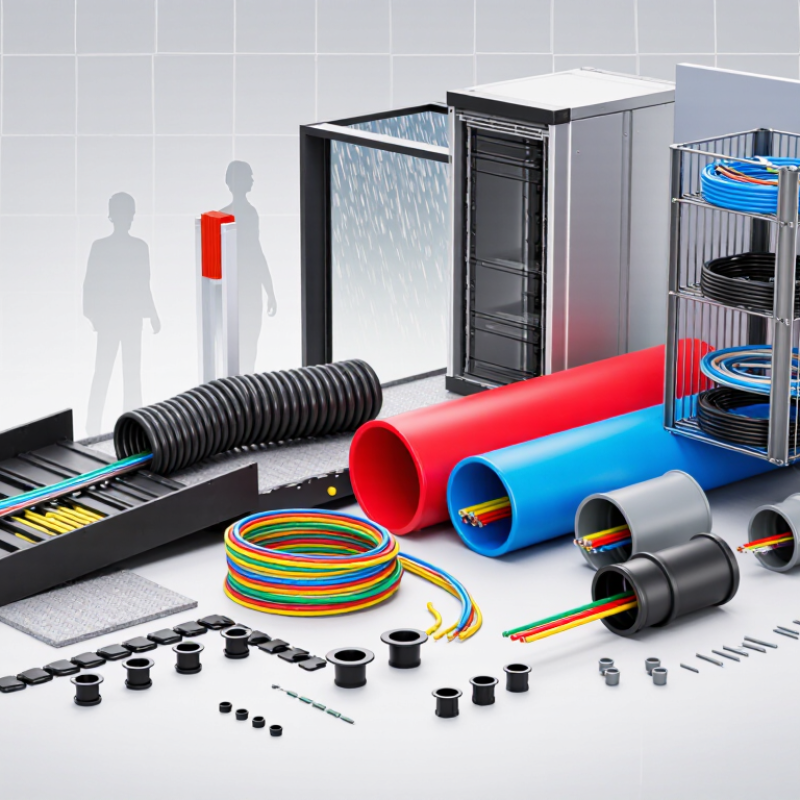
Choosing protection starts with the route: indoors, outdoors, across floors, or through machinery. Flexible conduit bends around equipment; rigid conduit offers a firm enclosure. Cable glands seal cable entry points, while grommets soften sharp panel edges. Spiral wrap allows branches to exit easily. Braided sleeves resist abrasion and stay flexible. Corrugated tubing handles bends and helps organize multiple cables. Cable trays support long overhead runs and simplify inspection. Raceways conceal cables along walls; cable ramps protect lines crossing walkways. Heat-shrink tubing insulates joints and provides a snug fit. Check each product’s temperature, impact, and environmental ratings before buying. A tidy bundle is not necessarily a protected one.
Market context matters, but figures need careful interpretation. Grand View Research estimated the global cable management market at USD 23.28 billion in 2023 and forecast growth from 2024 to 2030. This covers cable-management products broadly, not protection products alone. For buyers, the practical takeaway is to compare the exact use case, installation effort, and replacement access—not just the lowest unit price. One easy-to-miss weakness is the entry point: a guarded run can still rub against an unprotected edge.
Tips: Measure the full route, including bends and connectors. Leave room for maintenance. For floor crossings, check ramp height and load capacity. Ask suppliers for test data and installation guidance; product descriptions alone can leave important gaps.
| No. | Product Type | Typical Material | Key Features | Common Applications |
|---|---|---|---|---|
| 1 | Split Loom Tubing | Polyethylene or polyamide | Corrugated, flexible tubing with a lengthwise slit for bundling and enclosing cables; the slit allows installation around existing wires. | Vehicle wiring, equipment panels, and indoor cable bundles. |
| 2 | Braided Cable Sleeving | Woven polyester or other polymer fibers | Expandable construction accommodates bundles of different sizes and helps protect against abrasion; some types can be cut to length. | Computer wiring, control cabinets, and machinery harnesses. |
| 3 | Spiral Cable Wrap | Polyethylene or polypropylene | Open spiral design wraps around cables, keeps a bundle together, and allows individual wires to exit at different points. | Workstations, offices, and light-duty equipment wiring. |
| 4 | Flexible Nonmetallic Conduit | PVC or other specified polymer | Flexible corrugated conduit helps shield enclosed conductors from contact and abrasion; available constructions vary in environmental resistance. | Building services, equipment connections, and protected cable runs. |
| 5 | Liquid-Tight Flexible Metal Conduit | Interlocked metal core with a polymer outer jacket | Flexible metal construction provides mechanical protection, while the jacket helps resist moisture when used with compatible fittings. | Motors, pumps, and equipment connections in damp or exposed locations. |
| 6 | Cable Tray | Steel, aluminum, or fiberglass-reinforced polymer | Supports and routes cable runs; tray styles include ladder, ventilated trough, and solid-bottom designs. It is a support system rather than a sealed enclosure. | Industrial facilities, commercial buildings, and service corridors. |
| 7 | Cable Glands | Brass, stainless steel, or polymer | Secures a cable where it enters an enclosure and can provide strain relief; sealing performance depends on the gland, cable, and installation. | Control panels, junction boxes, and electrical equipment enclosures. |
| 8 | Grommets and Edge Protection | Rubber, elastomer, or polymer | Protects cables where they pass through panel openings or sharp edges, reducing the risk of cutting or abrasion. | Sheet-metal panels, vehicle bodywork, and equipment housings. |
| 9 | Heat-Shrink Tubing | Polyolefin or other heat-shrinkable polymer | Contracts around a cable or joint when heated to provide a close-fitting protective layer; properties such as sealing and flame resistance depend on the specific type. | Wire splices, terminals, and cable marking or insulation tasks. |
| 10 | Cable Protectors and Ramps | Rubber or rigid polymer | Creates a physical barrier over cables laid across floors; ramp designs can reduce direct foot or vehicle contact with the cables. | Events, workshops, temporary installations, and pedestrian routes. |
Choosing cable protection starts with the route and working conditions, not a product list. A braided sleeve can reduce abrasion where cables rub against machine frames, while spiral wrap suits bundles that need frequent branch-offs. Split conduit is useful for retrofits because it can fit around installed cables. Check the route.
For outdoor runs, UV-resistant conduit or a weather-rated cable tray may help shield cables from sunlight and falling debris. In damp areas, inspect joints and entry points; a protective cover cannot compensate for water entering through a poorly sealed connection. Near moving equipment, use flexible protection and leave enough slack for the full range of motion. Too little slack can cause strain. Too much can snag.
Foot traffic calls for a different choice: a floor cable ramp can reduce trip hazards across temporary walkways, but its height and channel size must suit the cables and location. Heat, oils, cleaning agents, and sharp edges also affect material selection, so compare the product’s rated limits with actual site conditions. A common oversight is measuring only the cable bundle, not connectors or bends. That mistake is easy to make. Inspect the route after installation, since vibration and routine maintenance can shift protection over time.
Selecting cable protection is only the start; installation determines whether it works as intended. Match conduit, sleeves, trays, or floor ramps to the cable type, route, and surrounding conditions. Check the specified bend radius and leave room for future additions. A tight sleeve can make later repairs difficult. Fit matters most.
Before fixing a system in place, inspect the route for sharp edges, standing water, heat sources, and vehicle traffic. Secure supports at the intervals recommended for the product, and avoid crushing cables with clamps. At crossings, confirm that ramps sit flat and cannot shift underfoot. Small gaps matter. Keep access points visible, especially where technicians may need to trace or test a cable.
Set inspection intervals according to exposure and use, rather than relying on a calendar alone. Look for cracked covers, loose anchors, crushed conduit, abrasion, discoloration, or water inside enclosures. Record the location and condition so changes are easier to track. Replace protection when damage exposes cables or compromises support; patching a worn section may only hide the problem. There is a trade-off: stronger protection can add bulk and restrict access, so review the route after installation. A neat installation is not always an easy one to maintain.