






Cable Trays in Commercial Buildings: A Functional Zoning Approach
Office Floors: Prioritizing Aesthetics, Shielding, and Flexibility
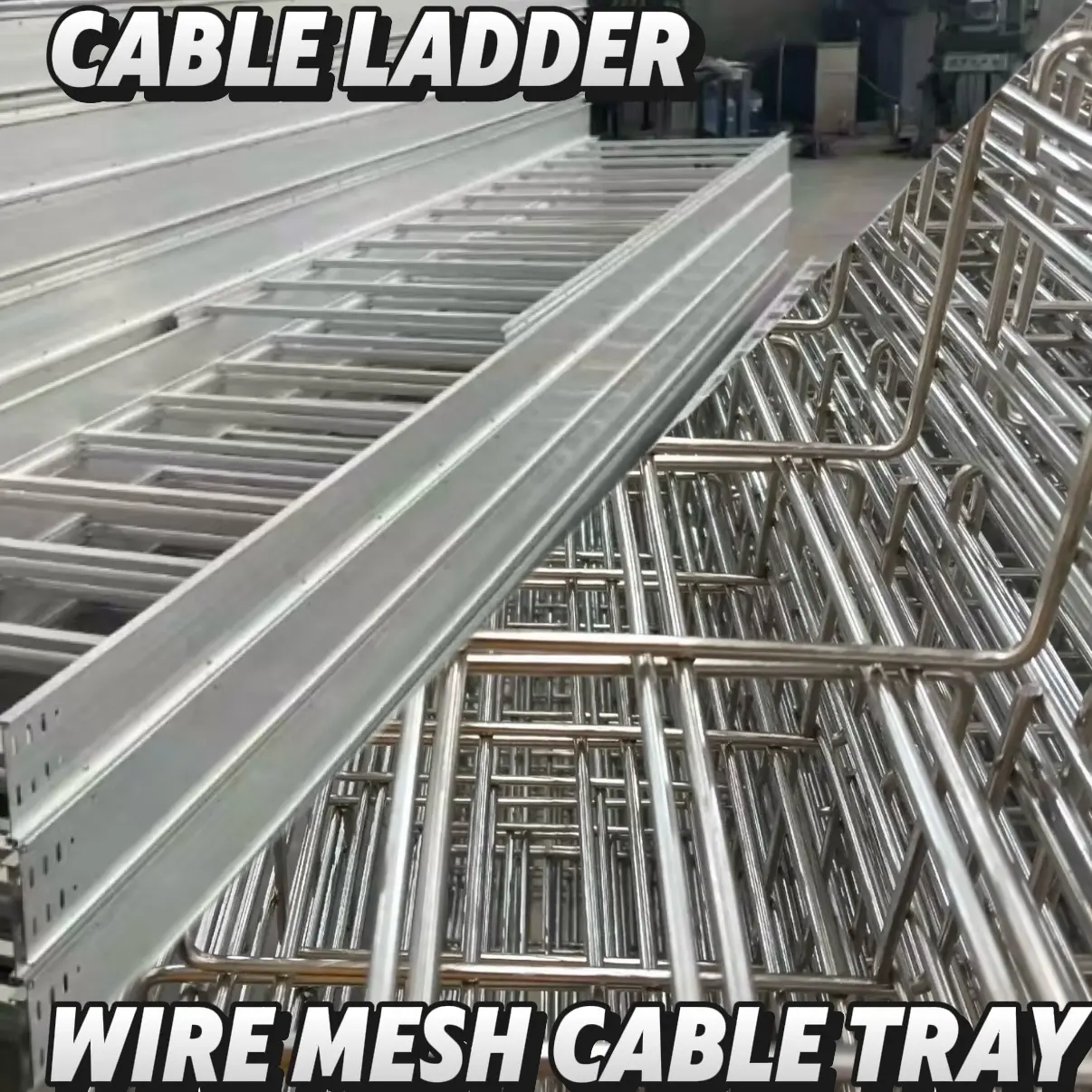
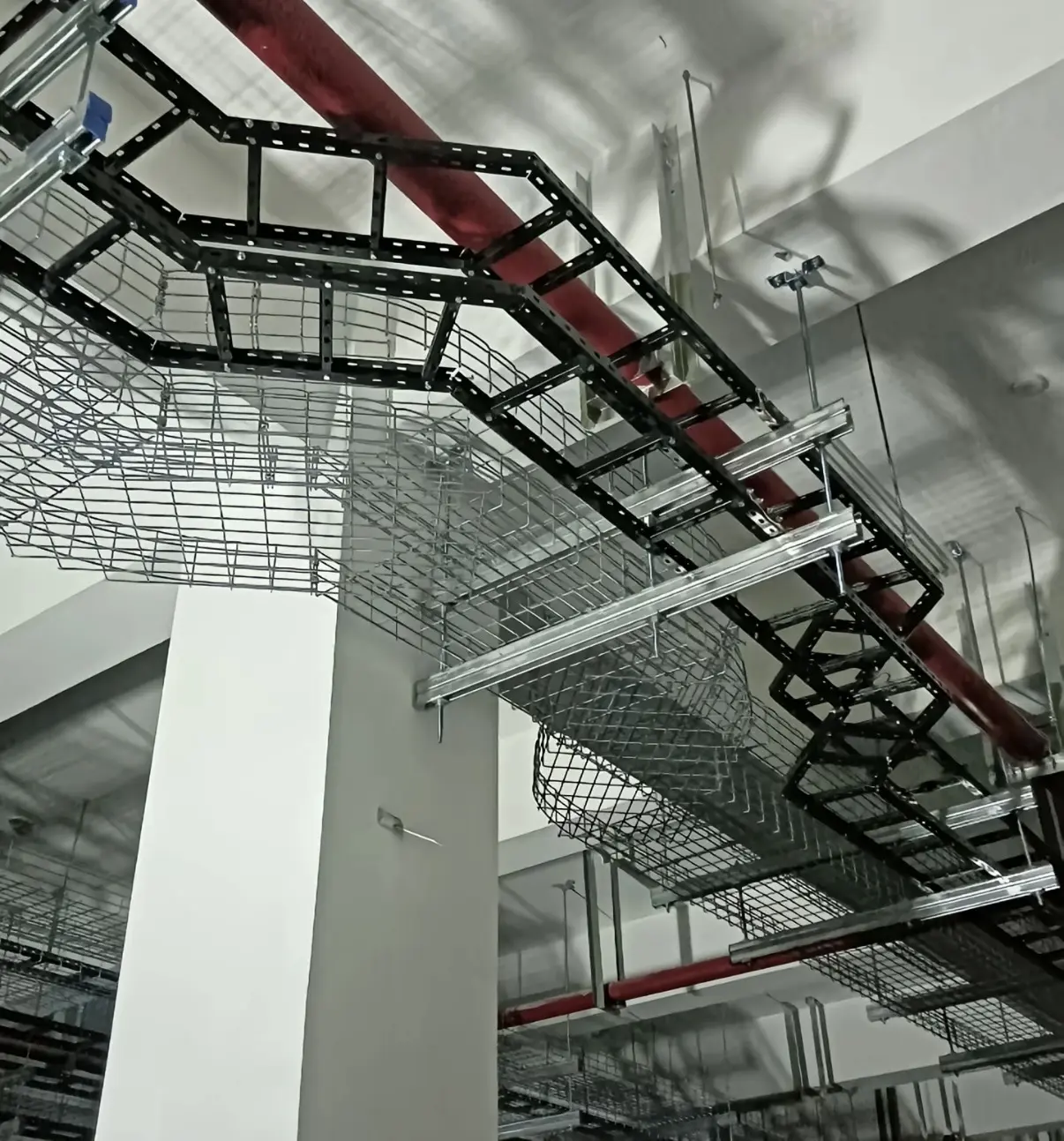
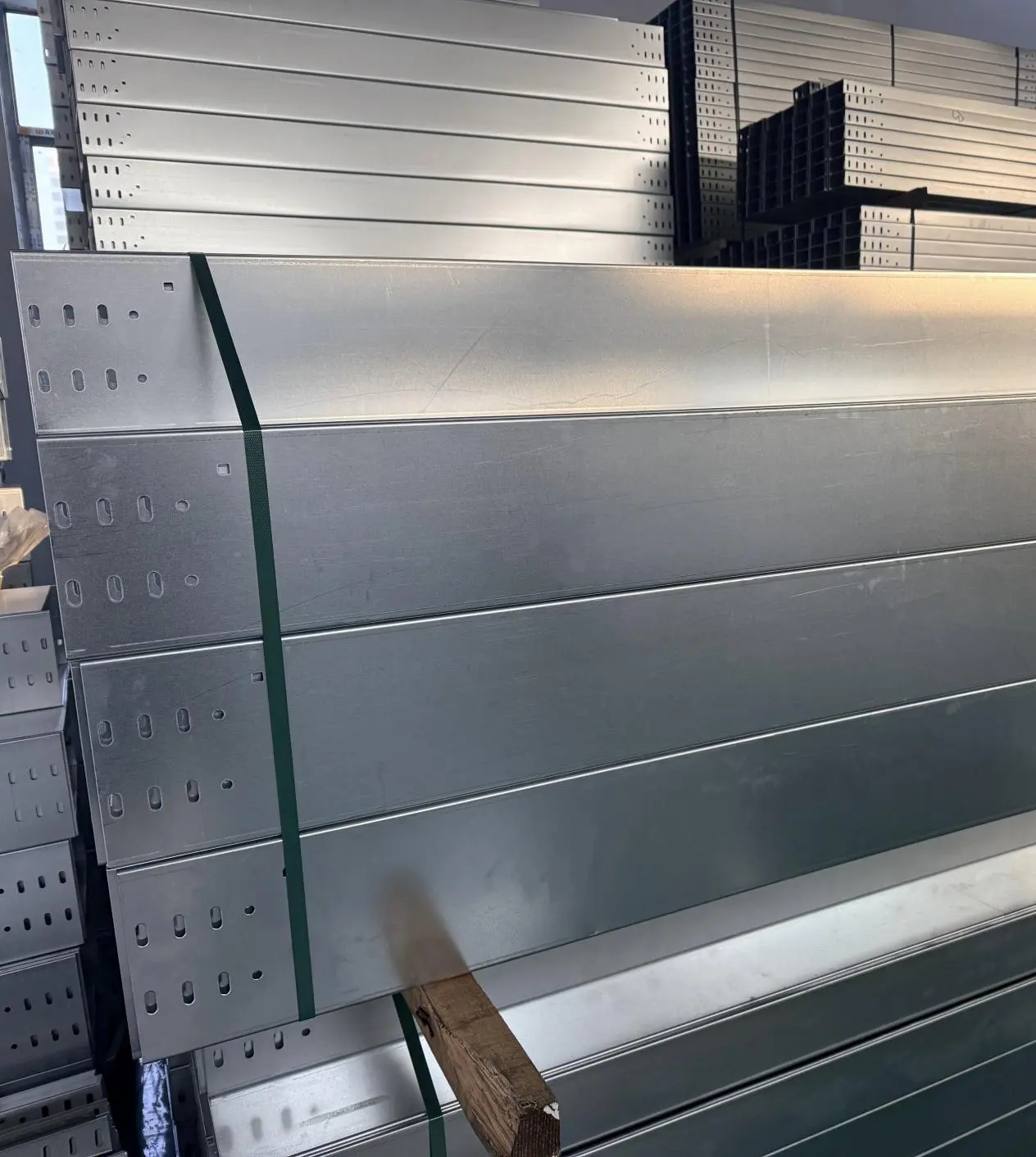
Within the office environment, the primary concerns lean towards maintaining a clean aesthetic, ensuring data integrity, and allowing for frequent reconfigurations. Here, Solid-Bottom Cable Trays with Covers are often the optimal choice. Their fully enclosed design provides excellent protection against dust accumulation and accidental contact, while also offering superior electromagnetic interference (EMI) shielding. This is crucial for preventing cross-talk between high-voltage power lines and sensitive data cables for IT networks and telecommunications. The sleek, enclosed design allows for seamless integration into ceiling voids and service corridors without compromising the professional office aesthetic. For dedicated telecom or server rooms housed within the office tower, where heat dissipation and constant cable management are paramount, Ladder-Type Trays become more suitable. Their open rung design offers superior airflow to cool dense bundles of data cables and allows for effortless addition, removal, or rerouting of individual lines as technology needs evolve.
Retail Common Areas and Mall Spaces: Balancing Strength, Access, and Fire Safety
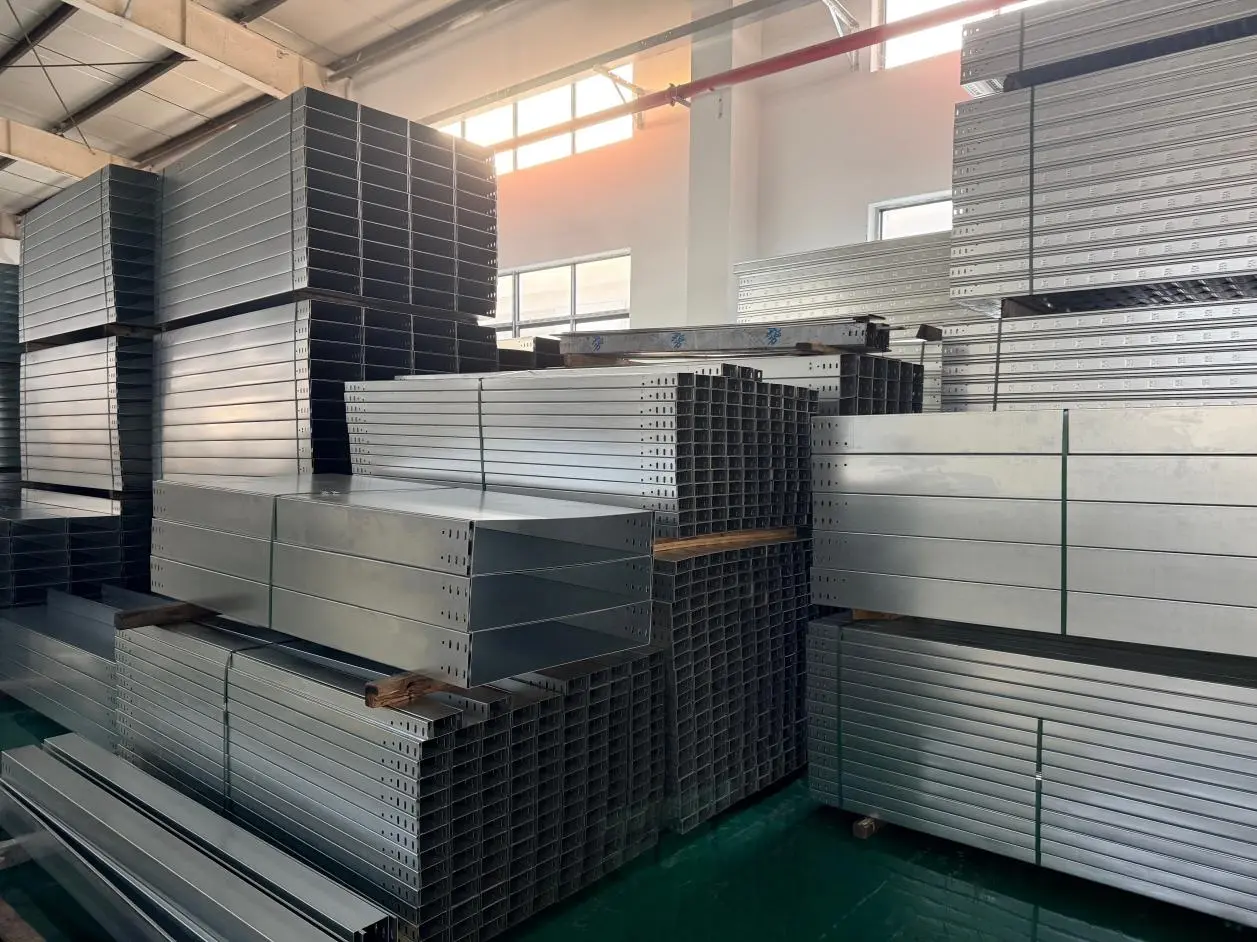
The demands in shopping mall atriums, service corridors, and behind retail units are markedly different. These areas require systems capable of supporting a diverse and heavy load from various tenants—from high-power feeds for restaurants and lighting to data cables for point-of-sale systems and digital signage. Heavy-Duty Perforated or Ladder Trays excel in this role due to their high load-bearing capacity and open design. The accessibility they provide is key for maintenance teams needing to connect new tenants or troubleshoot issues with minimal disruption. Furthermore, the open structure aids in passive heat dissipation from power cables. However, where trays pass through fire-rated walls or ceilings, or in areas demanding higher protection, Solid-Bottom Trays are mandated. These, when used in conjunction with approved fire-stop sealing systems, are essential for compartmentalizing fire and smoke, a non-negotiable requirement in public assembly spaces like malls.
Harsh Environment Zones: Parking Garages and Service Yards
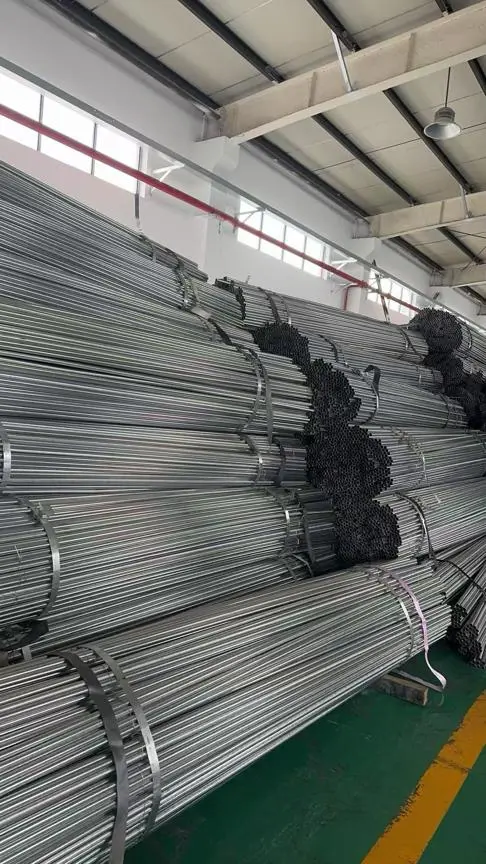
Underground parking levels and outdoor service areas present the most punishing conditions for any infrastructure. Constant exposure to humidity, temperature fluctuations, potential vehicle impact, and airborne contaminants like road salts demand extreme durability. For these zones, material and finish are as important as design. Hot-Dip Galvanized Steel Ladder Trays are the industry standard. The hot-dip galvanization process provides a thick, bonded zinc coating that offers exceptional corrosion resistance, ensuring a long service life despite the damp, often corrosive environment. The heavy-duty construction and ladder design can easily support the large-diameter cables required for garage lighting, exhaust fans, electric vehicle charging stations, and fire pump systems. In particularly aggressive environments, such as coastal locations, Stainless Steel Trays may be specified for their ultimate corrosion resistance, though at a significant premium.
Vertical Infrastructure: Risers and Mechanical Floors
The vertical riser shafts and centralized mechanical floors form the main arteries of a building's cable distribution system. These areas concentrate immense cable weights from multiple floors and require a focus on vertical load capacity, secure mounting, and organized, high-density routing. Heavy-Duty Cable Ladder Systems are specifically engineered for vertical riser applications. Their robust side rails and rung connections are designed to handle the sustained tensile load of long cable vertical runs. For mechanical floors housing electrical switchgear, HVAC controls, and building automation panels, Multi-Tiered Ladder or Channel Support Systems are highly effective. They allow for the systematic, segregated layering of different cable types (e.g., high voltage, low voltage, fiber optics) on a single, space-efficient support structure, simplifying installation, identification, and future modifications.
By applying a zoned methodology—selecting solid-bottom trays for offices, heavy-duty ladder trays for retail areas, galvanized trays for harsh environments, and specialized ladder systems for vertical shafts—engineers can optimize performance, safety, and lifecycle costs. This tailored approach future-proofs the property, ensuring its technical infrastructure can adapt to technological advancements and changing tenant needs for decades to come.