What is a Metal Stud Home and Why is it Gaining Popularity?
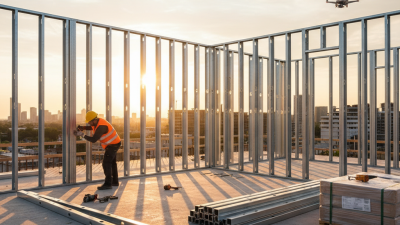
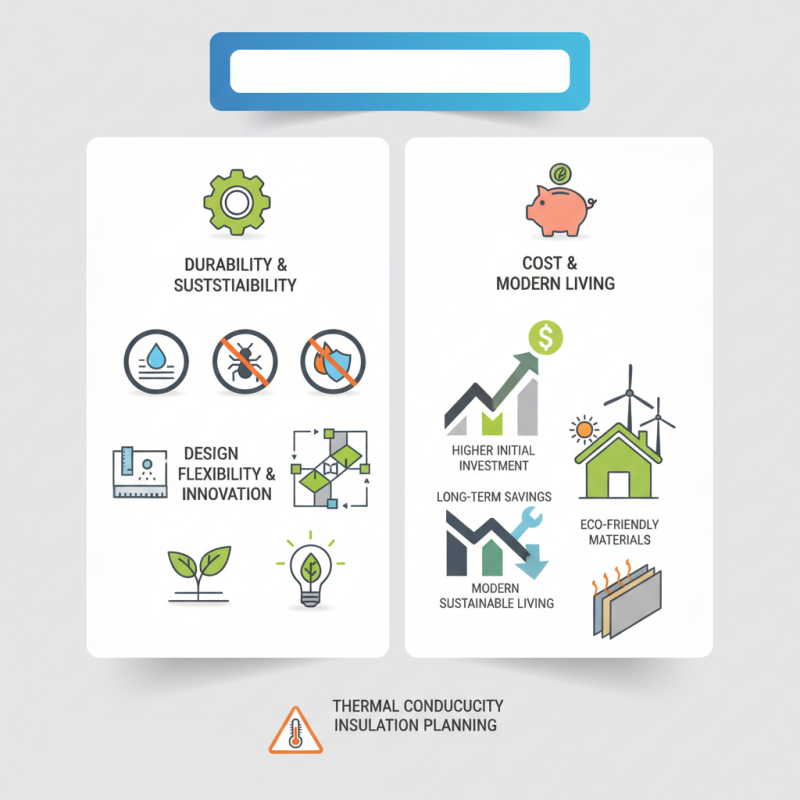
Metal Stud Homes are becoming increasingly popular in the modern construction landscape. This trend is driven by several factors, including durability and sustainability. Unlike traditional wood framing, metal studs offer resistance to moisture, pests, and fire. This means homeowners can enjoy a safer environment.
The design flexibility of Metal Stud Homes is another attractive feature. Builders can create intricate designs while maintaining structural integrity. This adaptability allows for innovative layouts and energy-efficient systems. However, it is essential to consider potential downsides, such as thermal conductivity. Metal can transfer heat more efficiently than wood. This necessitates careful insulation planning.
Affordability is crucial in today’s economy. Metal Stud Homes may require a higher initial investment, but the long-term savings on maintenance and energy often outweigh the upfront costs. With increasing awareness of eco-friendly materials, many see metal framing as a viable option. This growing preference reflects a shift toward modern, sustainable living.
What is a Metal Stud Home? Definition and Overview
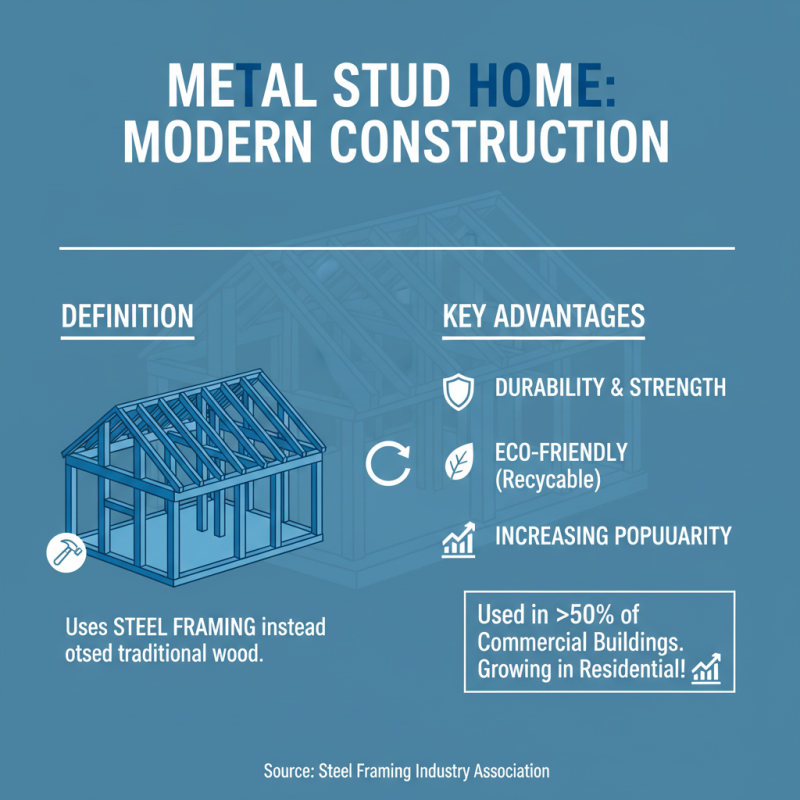
A metal stud home is built using steel framing instead of traditional wood. This modern construction method is gaining traction among homeowners and builders. According to a report from the Steel Framing Industry Association, steel framing is now used in over 50% of commercial buildings, and its use in residential homes is steadily increasing.
Metal studs bring several advantages. They are resistant to moisture, pests, and fire. This contributes to a longer lifespan for structures. An estimate by the American Iron and Steel Institute indicates that buildings with steel framing can last 30-50 years longer than those with wood. In regions prone to termites or moisture, metal studs can be a game-changer.
Tips: Consider insulation when using metal studs. Proper insulation can enhance energy efficiency. Metal framing can conduct temperature changes quickly, so pay attention to this aspect. Additionally, use professionals experienced in steel construction for the best results. Ensure they understand local codes and regulations, as this might affect your project.
The Advantages of Metal Studs Over Traditional Wood Framing
Metal stud framing is becoming increasingly popular in home construction. One significant advantage of metal studs is their durability. Unlike wood, metal does not warp or crack over time. According to a report from the Steel Framing Alliance, homes framed with metal studs can last up to 60 years with minimal maintenance.
Another important factor is fire resistance. Metal studs do not ignite or burn, providing better safety in case of fire. The National Fire Protection Association indicates that homes built with metal framing can reduce the risk of fire damage, which is a crucial consideration for homeowners. Additionally, metal studs are lightweight, easing transportation and installation, which can also lower construction costs.
However, there are challenges. Metal studs may conduct temperature changes, leading to potential thermal bridging. This requires extra insulation to maintain energy efficiency. The skill level of the workforce is essential, as improper installation can compromise structural integrity. While metal studs offer numerous benefits, careful evaluation is necessary before making the switch from traditional wood framing.
What is a Metal Stud Home and Why is it Gaining Popularity? - The Advantages of Metal Studs Over Traditional Wood Framing
| Feature |
Metal Studs |
Wood Framing |
| Durability |
Highly durable, resistant to warping and splitting |
May warp, split, or crack over time |
| Fire Resistance |
Non-combustible material |
Combustible, poses fire risk |
| Weight |
Lighter than traditional wood framing |
Heavier and bulkier |
| Pest Resistance |
No attraction from pests |
Susceptible to termites and other pests |
| Cost |
Generally lower labor costs due to faster installation |
May require more time and labor, increasing costs |
| Environmental Impact |
Can be made from recycled materials |
Sourced from trees, contributing to deforestation |
Key Statistics on Metal Stud Adoption in Residential Construction
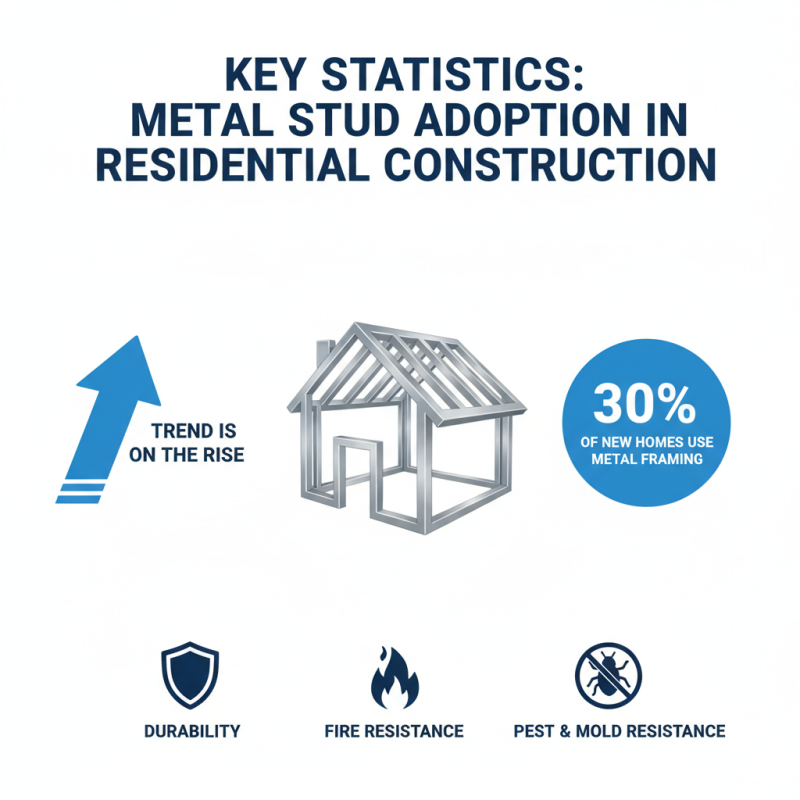
The trend of using metal studs in residential construction is on the rise. Recent statistics show that about 30% of new homes are built with metal framing. This marks a significant shift from traditional wood framing. Builders increasingly favor metal due to its durability and resistance to pests, mold, and fire.
Not only do metal studs offer structural integrity, but they also promote sustainability. Metal can be recycled, reducing waste in landfills. However, some challenges remain. Installation can be tricky for inexperienced builders. Additionally, the initial costs may be higher than wood.
Despite these hurdles, the benefits are compelling. Metal studs are lighter, allowing for easier transport and handling. They also provide better insulation, contributing to energy efficiency. The data suggests a growing acceptance of metal studs among homeowners and builders alike. This shift reflects a changing attitude towards innovative construction methods.
Environmental Impact and Sustainability of Metal Stud Homes
Metal stud homes are becoming a popular choice due to their environmental benefits.
Unlike traditional wood framing, metal studs are made from recycled materials, significantly reducing waste.
According to the Steel Framing Alliance, steel can be recycled over and over without a loss of quality.
This property ensures that metal studs contribute to a more sustainable construction process.
The durability of metal studs also plays a critical role in their appeal.
They are resistant to mold, pests, and fire. This resistance can lead to lower maintenance costs over time, which aligns with sustainable practices.
A report from the National Association of Home Builders indicates that homes built with metal studs often have a longer lifespan than those using wood.
This longevity means fewer resources are needed for replacements or repairs.
However, the industry faces challenges. For instance, the initial cost of using metal studs can be higher than wood alternatives.
This can deter some builders and homeowners despite their long-term benefits. Additionally, the thermal conductivity of metal may require additional insulation, potentially increasing the overall energy consumption during the first stages of construction.
Balancing these factors is critical for those considering metal stud homes.
Future Trends: Why Metal Stud Homes are Gaining Popularity in 2023
Metal stud homes are gaining significant traction in 2023. These structures utilize metal framing rather than traditional wood, offering durability and resilience. A recent industry report states that the demand for metal stud construction has increased by approximately 15% since the previous year. This trend reflects a shift in preferences among builders and homeowners alike.
The advantages of metal studs are compelling. They are resistant to mold, pests, and fire, making them a safe choice for many. Additionally, metal is recyclable, appealing to environmentally conscious consumers. A survey from a construction industry group indicated that 70% of builders now prefer metal framing for its longevity and structural integrity. However, some challenges remain. The initial cost can be higher, and working with metal requires specialized skills.
While efficiency in construction is reported to improve by around 20% with metal studs, the approach still requires careful planning. Addressing potential insulation issues is crucial for maintaining energy efficiency. Overall, as building practices evolve, metal stud homes are positioned to play a significant role in modern construction.