2026 Top 150 Steel Stud Prices What Buyers Need?
Buying 150 Steel Stud products in 2026 requires more than comparing the lowest online price. Buyers must examine thickness, width, coating, length, yield strength, and regional freight costs. A price tag can look attractive until delivery fees, cutting charges, and project waste appear.
Don Allen, PE, a respected cold-formed steel framing engineer, has emphasized this practical principle: “Cold-formed steel framing is a system, not just a material.” His point matters when evaluating 150 Steel Stud options. A stud is only one part of a wall assembly. Track compatibility, fastener selection, load requirements, insulation depth, and fire-rated specifications can change the final budget.
This guide reviews the 2026 market from a buyer’s perspective. It considers typical price ranges, supplier differences, bulk-order savings, and the details hidden behind quotations. Local availability may influence pricing more than expected. A warehouse in Texas may offer faster delivery than a cheaper supplier located several states away. That difference affects labor scheduling and storage needs.
Prices are not perfectly predictable. Steel coil costs, fuel charges, and construction demand can shift quickly. Some estimates also exclude taxes or special packaging. Buyers should request written quotations with clear specifications. Measure twice.
The analysis also recognizes an uncomfortable issue: the cheapest 150 Steel Stud may not be the most economical choice. Slightly thinner material can create installation problems, excessive waste, or redesign costs. Reliable purchasing depends on technical verification, supplier experience, and careful comparison—not price alone.
Steel Stud Basics: Types, Sizes, Grades, and Common Applications
2026 Top 150 Steel Stud Prices: What Buyers Need?
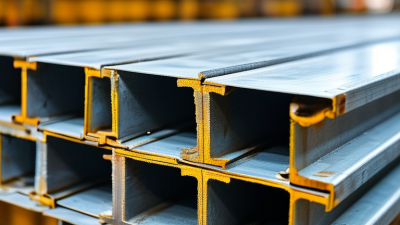
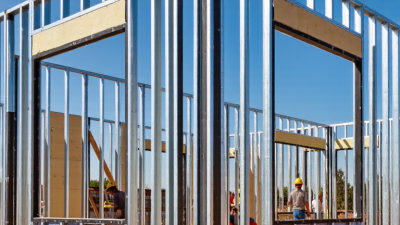
Steel studs form the hidden framework behind many durable walls and ceilings. The two main profiles are C-shaped studs and U-shaped tracks. Studs carry vertical loads, while tracks guide and secure them at the floor and ceiling. Non-load-bearing studs suit partitions, drywall backing, and office interiors. Load-bearing sections require thicker steel, careful engineering, and verified performance data.
Common widths include 1-5/8, 2-1/2, 3-5/8, 4, and 6 inches. Lengths often range from 8 to 20 feet, but availability varies. Gauge describes thickness, and a lower gauge usually means heavier steel. Buyers should also check the protective coating, yield strength, and applicable testing standard. Galvanized steel helps resist corrosion, especially in humid service areas. Still, coating quality can differ. That detail matters. Price depends on size, gauge, coating, order volume, freight, and regional supply. The cheapest quote may exclude delivery or accessories.
Tips:
Confirm wall height, spacing, and load requirements before requesting prices. For ordinary interior partitions, 16- or 24-inch spacing is common, but project drawings control. Measure twice. Ask for mill certificates or technical sheets when structural performance matters. I have seen estimates fail because the buyer compared length only, ignoring gauge and coating. A small specification mistake can create cutting waste, delays, or unsafe assumptions. Review the numbers with a qualified engineer when studs support floors, roofs, or heavy fixtures.
How Steel Stud Prices Are Calculated in 2026
2026 Top 150 Steel Stud Prices: What Buyers Need?
How Steel Stud Prices Are Calculated in 2026
Steel stud prices begin with the mill price for galvanized steel coil. The World Steel Association reported about 1.88 billion tonnes of crude steel production in 2024. That huge supply base still faces energy, freight, and regional capacity changes. Buyers should track coil prices, not only finished stud quotations. The U.S. Bureau of Labor Statistics Producer Price Index for steel mill products can help compare monthly movement. It is useful, but not perfect for every local market.
A practical quote usually combines steel weight, stud size, gauge, zinc coating, forming labor, packaging, delivery, and supplier margin. Thicker gauges consume more steel per metre. A heavier coating also raises material cost. Freight matters more when bundles travel long distances. In my experience, a low unit price can hide short lengths, loose tolerances, or high delivery charges. That mistake is easy to make. Prices also change with order volume and payment terms, so one “top 150” price list cannot fit every project.
Tips: Ask for the steel coil reference date, gauge tolerance, coating class, bundle quantity, and freight basis. Compare the delivered cost per metre. Keep two quotes open for several days. That may be inconvenient, but markets move quickly. Recheck the calculation against the BLS index and current regional freight data before approval.
Coverage: 150 size-and-length combinations
Base: 8 ft equivalent pricing
Material: G40/G60 galvanized steel profiles
Price status: Budgetary 2026 estimate
Steel Stud Price Matrix — 2026 Planning Ranges
| No. |
Nominal Stud Width |
Approx. Depth |
Steel Thickness |
Approx. Gauge |
Length |
Estimated Low Price |
Estimated High Price |
Calculation Basis |
How the prices are calculated: The displayed range uses a modeled 8 ft base price for each standard width and thickness, multiplied by the selected length divided by 8. The low estimate represents larger-volume purchasing, while the high estimate allows for smaller orders, regional freight, galvanized-coil fluctuations, and distributor handling. Prices exclude track, fasteners, labor, tax, delivery, engineering, and special punch-outs.
2026 Price Guide to the Top 150 Steel Stud Options
The 2026 Price Guide to the Top 150 Steel Stud Options should begin with classification, not a single “average” price. The 150 options include light-gauge framing members, deeper structural studs, track, different lengths, and corrosion-resistant finishes. In practical purchasing, a basic 3 5/8-inch, 20-gauge stud may budget around US$1.50–$3.50 per linear foot, while heavier 14-gauge sections can exceed US$6. Prices vary by region, order volume, freight, and fabrication requirements.
Cost planning should compare price per linear foot, not price per piece. The 2025 RSMeans Construction Cost Data shows that material, labor, equipment, and regional location can change installed costs substantially. U.S. Bureau of Labor Statistics producer-price data also shows continuing movement in fabricated metal products, although steel studs do not always follow raw steel prices immediately. That delay matters. A low mill price may not produce a low delivered price.
From field estimating experience, buyers should record gauge, depth, flange width, length, coating, and bundle quantity for every option. A 10-foot stud can look cheaper than a 12-foot stud, yet create more joints and labor. I would not treat any 2026 figure as permanent. Freight surcharges, project timing, and local availability can overturn a careful spreadsheet. Check at least three written quotations, and leave a modest allowance for cutting waste and damaged pieces.
2026 Top 150 Steel Stud Prices: Buyer’s Price Guide
Indicative 2026 U.S. market prices for common non-load-bearing galvanized steel studs. The benchmark represents a broader set of 150 size, gauge, and length options; the chart shows representative median prices per piece before tax, freight, and installation.
Prices generally increase with heavier gauges, wider profiles, and longer lengths. Use supplier quotations to confirm regional availability, coating requirements, order volume, and delivery costs.
Key Factors Buyers Need to Compare Before Purchasing
Steel stud prices in 2026 should be compared by specification, not by headline price alone. Buyers need to check stud width, length, thickness, yield strength, and coating type. A 0.55 mm stud may look similar to a 0.75 mm model, but its load performance can differ significantly. Measure twice.
Ask whether the quoted price includes tracks, screws, packaging, and delivery. Freight can change the final cost, especially for long bundles or small orders. Compare prices per piece and per square meter, because suppliers may use different packing quantities. Confirm current steel surcharges and lead times in writing. A low quote can still become expensive. That detail is easy to miss.
Quality evidence also deserves careful review. Request test reports, dimensional tolerances, corrosion protection data, and documentation showing compliance with the project’s applicable building requirements. Check whether the supplier can maintain consistent thickness across repeated batches. On active construction sites, uneven edges and poor punching can slow installation and increase waste. Labor cost matters. Buyers should also inspect sample bundles before placing a large order. I have seen purchasing decisions focus too heavily on unit price, while rework quietly consumes the savings. Allow space for cutting loss, damaged pieces, and site storage conditions. A fair comparison includes performance, reliability, delivery risk, and the cost of correcting a weak choice.