Leave Your Message

2026 Best Slotted Track Metal Studs for Global Sourcing

Global sourcing of Slotted Track Metal Studs demands more than comparing catalogue prices. Buyers must examine steel grade, gauge, coating, slot geometry, dimensional tolerance, and verified load performance. A product that looks identical on a screen may behave differently during installation.

Don Allen, P.E., a recognized cold-formed steel framing specialist, offers a practical warning: “Details matter.” That short statement fits this market closely. Slot spacing, flange alignment, screw engagement, and track continuity can influence framing accuracy and site productivity. His principle reminds purchasing teams to inspect evidence, not just sales claims.

This 2026 guide evaluates Slotted Track Metal Studs for international procurement. It considers factory experience, quality-control procedures, sample approval, packaging, lead times, and technical documentation. It also reviews how suppliers support projects across different building practices and regional requirements. Certifications should be checked against the destination market, not accepted blindly.

Small details matter.

A reliable supplier should provide material test reports, coating information, tolerance records, and installation guidance. Independent inspection can reduce unpleasant surprises. However, no sourcing list is flawless. Freight costs change, steel prices move, and factory capacity can weaken during busy seasons. Buyers should keep a backup supplier and request current evidence before signing contracts.

The strongest choice is not always the cheapest offer. It is the supplier that combines consistent manufacturing, transparent communication, and realistic technical support. This comparison aims to make that decision clearer, while acknowledging one uncomfortable truth: product data alone cannot replace careful verification.

2026 Best Slotted Track Metal Studs for Global Sourcing

Definition and Core Features of Slotted Track Metal Studs

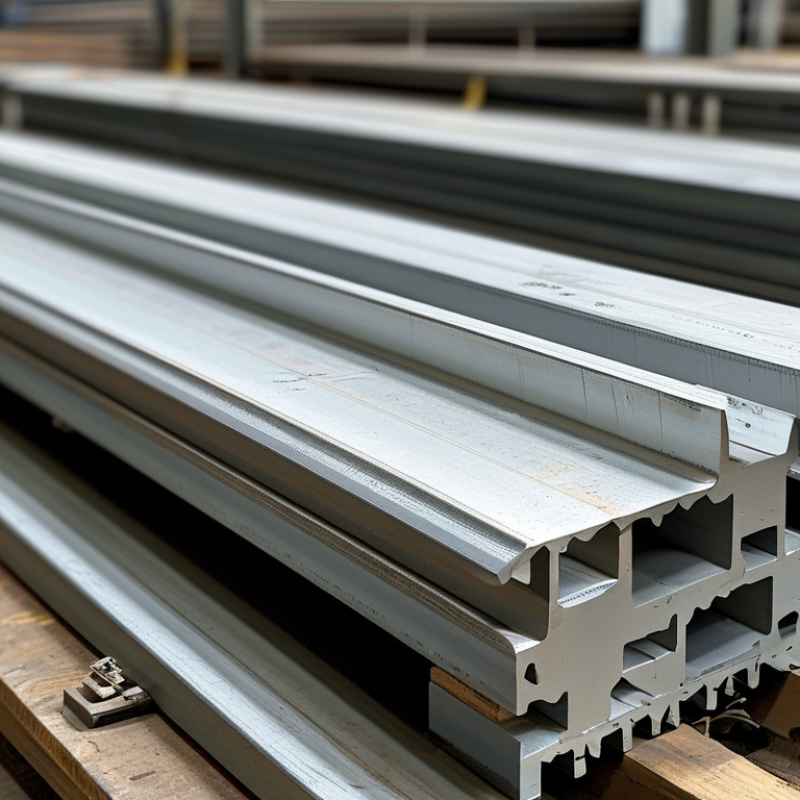
Slotted track metal studs are cold-formed steel framing components used for interior partitions and ceiling systems. The track usually has elongated slots along its flanges or web. These openings allow controlled vertical movement between a wall frame and the building structure above. Studs fit inside the track and create a straight, lightweight skeleton for boards, insulation, and service routes.

Core features include galvanized steel, consistent dimensions, low weight, and predictable installation. Slot length and spacing matter because they influence deflection capacity. Steel thickness also affects stiffness, screw holding, and resistance to handling damage. In global sourcing, buyers should check material grade, coating weight, dimensional tolerance, packaging, and test documentation. A small tolerance issue can make installation frustrating. I have seen drawings look correct while the delivered profile feels slightly loose. That detail deserves more attention.

Tips: Request samples before placing a large order. Measure slot length, flange width, steel thickness, and coating condition. Confirm whether the system requires special fasteners or installation clearances. Compare technical drawings with local building requirements, since fire, acoustic, seismic, and corrosion expectations vary by project. Do not judge quality by surface shine alone. A duller finish may still perform well, while poor forming can weaken the profile. Keep one approved sample for future inspections.

Key Materials, Profiles, Sizes, and Performance Standards

Slotted track metal studs depend on three decisions: steel grade, profile geometry, and coating consistency. The World Steel Association reported 1,888.2 million tonnes of crude steel production in 2023, showing the depth of the global supply base. However, volume does not guarantee suitable framing steel.

Look closely.

Cold-formed galvanized steel is common for interior partitions. G550 steel can provide higher yield strength, while lower-strength grades may simplify forming. Confirm the actual mill certificate, not only the catalog description. Common profiles include C-shaped studs and U-shaped tracks, with slots positioned for services, deflection, or fastener access. Typical thicknesses range from about 0.50 to 1.20 millimetres, but structural loading must control selection. Available widths often include 50, 75, and 100 millimetres. Regional sizes vary.

ASTM C645 addresses nonstructural steel framing requirements, while ASTM C754 covers installation practices. European projects may reference EN 14195 for metal framing components. Check slot spacing, flange return, web stiffeners, and corrosion protection against the project environment. A thicker coating can matter near humid coastal sites. It is easy to overlook cut-edge protection.

Measure twice.

In sourcing inspections, I would verify thickness at several points, coating mass, slot dimensions, straightness, and bundle labeling. One practical weakness remains: suppliers sometimes publish nominal thickness without tolerance data. That gap deserves correction before price comparison.

How to Evaluate Slotted Track Metal Studs for Global Sourcing

2026 Best Slotted Track Metal Studs for Global Sourcing

How to Evaluate Slotted Track Metal Studs for Global Sourcing

Evaluating slotted track metal studs starts with measurable specifications. Confirm steel thickness, yield strength, coating weight, slot spacing, and profile dimensions. These details affect wall alignment, load performance, and installation speed. Do not rely on nominal thickness alone. Actual measurements may vary after forming.

Check how the stud and track connect in real conditions. A smooth slot edge reduces handling injuries and fit problems. Review deflection limits, corrosion resistance, fire performance, and acoustic results. These properties belong to the tested wall assembly, not only the metal section. Ask for mill certificates, dimensional reports, coating records, and independent test documents. Reliable suppliers should explain their inspection frequency and traceability system.

Production capability also matters. Audit tooling condition, roll-forming control, bundle labeling, and change management. Request pre-production samples before approving larger orders. Inspect slot position, straightness, burrs, and bundle protection. Packaging must prevent moisture damage during long ocean transport. Small defects can become expensive on a distant project. A supplier may pass one sample and still struggle with consistency. That possibility deserves attention. Recheck critical dimensions after production begins. Local building requirements can also differ, so technical approval should come from qualified professionals in the destination market.

Manufacturing Quality, Compliance, Packaging, and Logistics

2026 Best Slotted Track Metal Studs for Global Sourcing

Manufacturing Quality, Compliance, Packaging, and Logistics

Reliable slotted track metal studs begin with controlled steel, not attractive catalog photos. The World Steel Association reported 1.88 billion tonnes of crude steel production in 2024. Buyers should verify coil grade, thickness, yield strength, and zinc coating weight through mill certificates and independent testing. Slotted geometry also needs measurement. Slot spacing, edge distance, and stud engagement affect installation accuracy.

Applicable standards must match the destination market. ASTM C645 and C754 support North American framing specifications, while EN 14195 covers European metal framing components. ISO 9001 certification can strengthen process control, but it does not replace product testing. Request dimensional reports, coating results, batch traceability, and corrective-action records. Certificates can look complete.

Packaging protects both quality and schedule. Use strapped bundles, corner guards, moisture-resistant wrapping, and visible batch labels. Long profiles can bend when forklifts lift unevenly. This small detail causes expensive site delays. According to UNCTAD’s Review of Maritime Transport 2024, more than 80% of global trade by volume moves by sea. Therefore, confirm container loading plans, bundle limits, fumigation requirements for timber, and destination labeling before production. The World Bank’s 2023 Logistics Performance Index also emphasizes tracking and delivery reliability. I would still inspect the first shipment personally. Photos rarely reveal hidden corrosion or crushed edges.

Supplier Selection, Cost Factors, and Procurement Best Practices

Global sourcing of slotted track metal studs starts with supplier discipline, not the lowest quotation. The World Steel Association reported 1.89 billion tonnes of crude steel production in 2023. This large supply base creates choice, but quality still differs by mill, coating process, and forming accuracy. Request material certificates, gauge tolerances, coating weight, slot dimensions, and production photographs. Verify testing against the applicable ASTM or EN standard before approving samples.

Cost comparisons should use landed cost. Include steel weight, galvanizing, tooling, packaging, inland transport, ocean freight, duties, inspection, and warehouse handling. A thinner stud may look cheaper. It may also increase installation waste or structural risk. Freight prices remain sensitive to route disruptions and capacity changes, as highlighted in recent UNCTAD maritime transport reviews. Ask suppliers to show price-adjustment formulas, not vague “market-based” clauses. Small details matter.

Procurement works better with a controlled RFQ sheet. Specify section size, steel grade, thickness, slot spacing, bundle quantity, and pallet requirements. Compare at least three qualified suppliers, then inspect a pilot shipment before larger orders. ISO 9001 certification supports process control, but it does not replace product testing. That distinction is often missed. Maintain dual sourcing for critical regions, while avoiding unnecessary supplier fragmentation. One practical weakness remains: forecasts are rarely precise. Review demand monthly, keep a modest safety stock, and record every defect with photographs, lot numbers, and corrective-action deadlines.

2026 Best Slotted Track Metal Studs for Global Sourcing - Supplier Selection, Cost Factors, and Procurement Best Practices

Category Evaluation Dimension Typical 2026 Benchmark or Technical Data Procurement Implication
Product Specification Base material Cold-formed galvanized steel; common product standards include ASTM A1003/A1003M and EN 14195, with material requirements commonly linked to EN 10346 or equivalent standards. Request the governing standard, steel grade, yield strength, coating designation, and test documentation in the quotation.
Product Specification Common stud thickness Approximately 0.50–1.20 mm for many non-load-bearing interior systems; heavier structural applications may require thicker gauges based on engineering calculations. Do not compare quotations by thickness alone; compare effective section properties, design load, deflection limits, and tested assembly performance.
Product Specification Typical section sizes Common nominal widths include approximately 50, 70, 75, 90, 100, stud? and 150 mm; exact dimensions vary by regional framing system. Typical flange widths are about 35–50 mm. Provide a dimensioned drawing rather than relying on nominal size terminology, which differs between markets.
Product Specification Track slot function Slotted or deflection tracks typically use elongated openings to accommodate controlled vertical movement between a partition and the supporting structure. Slot geometry is system-specific. Approve slot length, pitch, edge distance, and permissible movement with the project engineer before production.
Product Specification Steel density and weight calculation Carbon steel density is approximately 7,850 kg/m³. Finished weight depends on thickness, developed width, perforations, and zinc coating. Use net and gross weight separately for landed-cost modeling, container planning, and customs documentation.
Corrosion Protection Zinc coating Common coating designations include approximately 120–275 g/m² total zinc mass for both surfaces, subject to the applicable standard and product application. Specify coating mass or thickness explicitly; “galvanized” without a numeric requirement is not sufficient for supplier comparison.
Corrosion Protection Indoor and high-humidity suitability Standard galvanized steel is commonly used for dry interior environments. Coastal, continuously damp, chemically exposed, or exterior conditions may require a higher coating level or alternative protection. Match coating selection to the project exposure classification and require written approval for substitutions.
Quality Assurance Dimensional tolerances Control outside dimensions, flange width, lip geometry, slot position, slot pitch, straightness, camber, and cut length according to the approved drawing and applicable standard. Include measurable tolerances in the purchase order; avoid acceptance terms such as “standard tolerance” without a referenced standard.
Quality Assurance Required inspection records Recommended records include mill certificates, coating test results, dimensional inspection reports, batch traceability, and packing-list reconciliation. Make document submission a pre-shipment requirement and link payment milestones to document approval.
Supplier Selection Production capability Preferred suppliers should demonstrate roll-forming capability, programmable slot punching, automatic length cutting, profile changeover control, and stable batch-to-batch repeatability. Ask for process flow, machine capability, sample inspection data, and evidence of production capacity during the required delivery window.
Supplier Selection Minimum order quantity Custom slotted profiles may have minimum orders based on coil utilization, setup time, packaging, and shipping volume. The commercial MOQ must be confirmed for each profile and length. Request MOQ by SKU and identify whether mixed profiles, mixed lengths, or trial quantities are permitted.
Supplier Selection Lead time A practical planning range is approximately 2–6 weeks for repeat production after drawing approval, plus international transit and customs clearance. New tooling or first-article approval can extend the schedule. Separate tooling, production, port, transit, clearance, and local delivery time in the purchase schedule.
Cost Factors Raw-material exposure Steel coil cost is usually the largest variable cost. The final price also reflects coating mass, slitting yield, scrap, energy, labor, tooling, packing, financing, and logistics. Request a validity period and a transparent price-adjustment formula tied to an agreed steel index or documented mill quotation.
Cost Factors Profile complexity Multiple bends, tight tolerances, frequent slot punching, short cut lengths, and many SKU changes generally increase setup time, scrap, and inspection cost. Standardize compatible profiles and lengths where possible, while preserving required structural and movement performance.
Cost Factors Indicative cost structure For budgeting, material commonly represents roughly 55–75% of ex-works cost; processing, coating allocation, packaging, overhead, and margin account for the balance. Actual percentages vary by market and order size. Use a total-cost model instead of selecting the lowest unit price without considering yield, claims, freight, and installation compatibility.
Logistics Packing method Common export packing includes bundled steel sections, steel or polymer strapping, protective wrapping, SKU labels, and moisture protection appropriate to the transport route. Specify bundle quantity, maximum bundle weight, label format, lifting points, and protection against condensation and edge damage.
Logistics Container utilization Light-gauge sections are often limited by cubic volume before reaching the container’s maximum payload. Bundle geometry and length can materially affect utilization. Request a loading plan showing bundle dimensions, gross weight, cubic volume, and the number of bundles per shipment.
Commercial Terms Incoterms and landed cost Compare quotations on the same basis, such as EXW, FCA, FOB, CIF, or DAP. Landed cost should include freight, insurance where applicable, duties, customs fees, inland delivery, inspection, and financing. Use one standardized RFQ template and calculate all offers to the same delivery point and currency.
Commercial Terms Payment and currency risk Common international structures include an advance payment with balance against shipping documents, documentary credit, or milestone payment subject to inspection. Align payment with measurable milestones and define currency, bank charges, document requirements, and remedies for late delivery or nonconformity.
Procurement Best Practice RFQ package A complete RFQ should contain a dimensioned profile drawing, steel grade, thickness, coating, slot geometry, cut length, quantity by SKU, packaging, required standards, inspection plan, delivery term, and destination. A complete technical package reduces hidden assumptions, quotation variance, and production rework.
Procurement Best Practice Sample and first-article approval Approve representative samples before mass production, including profile dimensions, slot location, cut length, surface condition, coating, bundle labeling, and fit with mating components. Record approved samples and retain them as the visual and dimensional reference for future shipments.
Procurement Best Practice Pre-shipment inspection Inspect a statistically representative sample or an agreed quantity from each production batch. Verify dimensions, slot pattern, quantity, labeling, packing, and documentation. Define acceptance criteria, sampling level, nonconformity classification, and re-inspection rules before production begins.
Risk Management Supplier scorecard A balanced scorecard can weight technical compliance at 30%, quality performance at 25%, total landed cost at 20%, delivery reliability at 15%, and service or documentation at 10%. Adjust weights to project priorities and evaluate at least two qualified sources for critical profiles.
Risk Management Common failure risks Frequent risks include incorrect slot pitch, mixed bundle labels, thickness substitution, insufficient coating, length variation, transit corrosion, incomplete certificates, and unapproved drawing changes. Use controlled drawings, batch traceability, change approval, moisture-resistant packing, and documented corrective-action procedures.
Sustainability Environmental documentation Relevant records may include recycled-content information, energy or emissions data, responsible sourcing declarations, and recycling instructions. Steel is widely recyclable, but project claims require documented evidence. State the required environmental documentation in the RFQ and distinguish verified data from supplier estimates.

Note: Technical ranges and cost-related proportions are budgetary benchmarks for initial global sourcing analysis. Final requirements must be confirmed against the project design, applicable local standards, approved drawings, current steel prices, and the selected delivery route.